
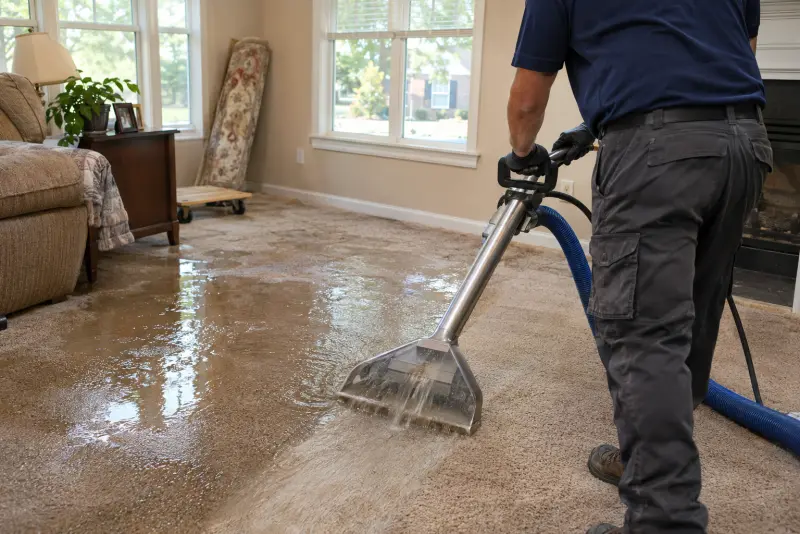
Emergency Water Extraction
Standing water removed before it reaches drywall, trim and stored belongings.
Get help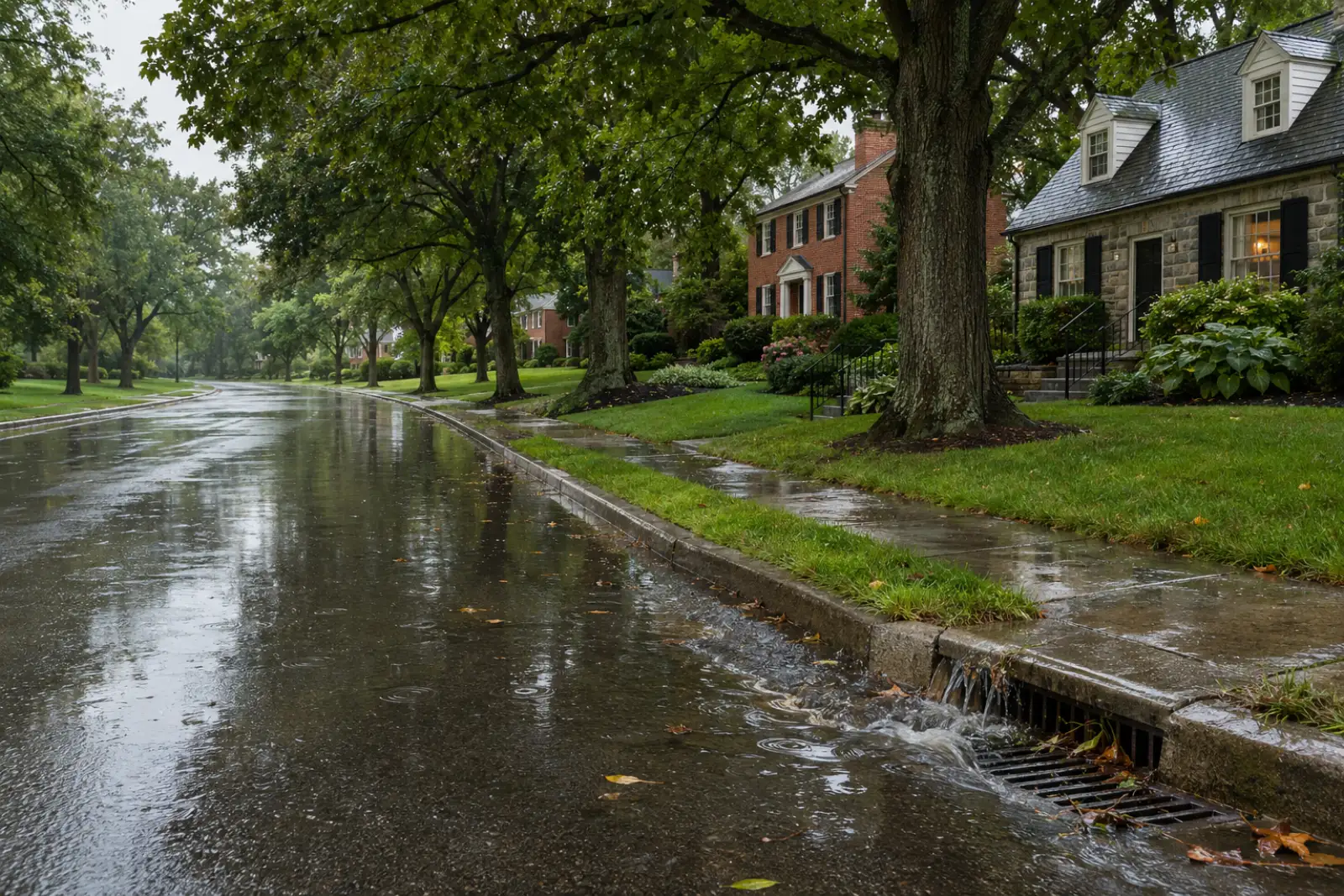
Timonium's post-war ranchers and split-levels were built for family life, not for forty years of copper pipe fatigue. We deal with the results.
Call (410) 397-1674 Or request service online. Calls are answered 24/7.Timonium stretches from the State Fairgrounds and York Road west toward Mays Chapel and the I-83 interchange. The core neighborhoods were built in the 1950s, 1960s and 1970s, with ranchers, split-levels and colonials on generous lots.
Those homes share a familiar pattern: original copper supply lines, cast iron drains, a water heater in the utility corner and a basement that was finished ten or twenty years after the house. A failed washing machine hose or water heater tank can put an inch of water across the whole lower level before anyone notices.
Newer townhomes and condos near the fairgrounds and light rail bring a different set of problems: shared walls, common plumbing stacks and a single leak that affects several units. We document each unit separately for the property manager and each owner's carrier.
Most Timonium jobs start with one of these four failures.
A tank usually fails at the seam or the drain valve. The water is clean at first, but a failed heater in a finished basement can release forty or more gallons before the supply is shut off.
Rubber hoses bulge and burst under pressure. Braided stainless lines reduce the risk, but the supply valve itself can fail. A second-floor laundry room sends water into the ceiling below.
Summer storms knock out power and fill the sump pit at the same time. A battery backup helps, but a failed check valve or discharge line can defeat it.
Original drains scale and crack; copper develops pinholes. Both leak inside walls and ceilings where the damage is hidden until the drywall stains or softens.
The earlier the water is extracted, the more of the finish survives. Carpet padding is cheap to replace; saturated subfloor and wall cavities are not.
The same crew handles extraction, drying, contamination cleanup and the repair.
Standing water removed before it reaches drywall, trim and stored belongings.
Get help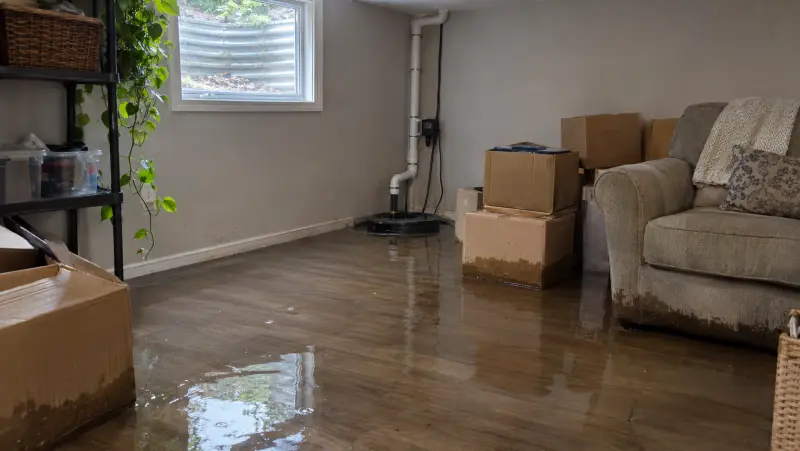
Sump failures, seepage and storm runoff in finished and unfinished basements.
Get help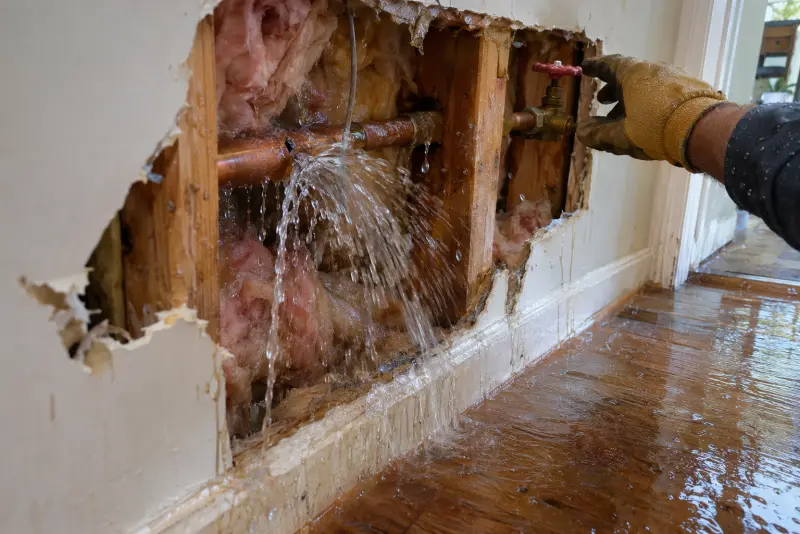
Freeze-thaw splits, hidden wall leaks and ceiling stains traced to the source.
Get help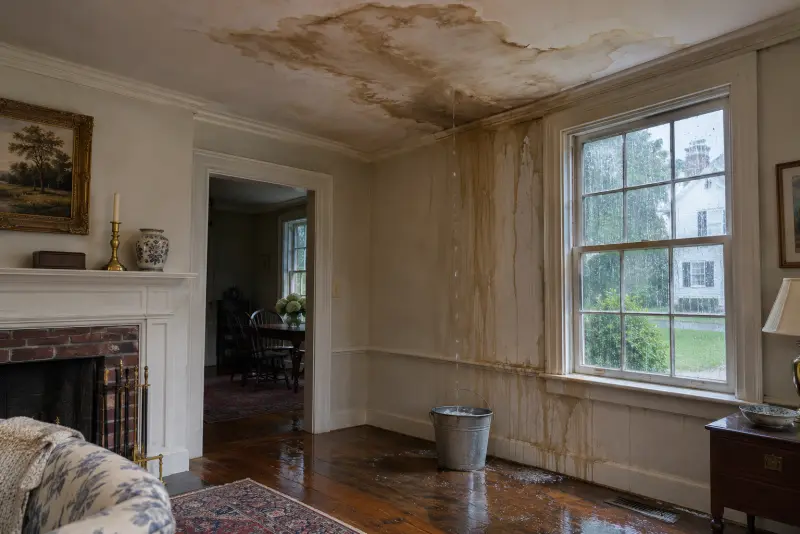
Wind-driven rain, ice dams and ceiling leaks after a Baltimore County storm.
Get help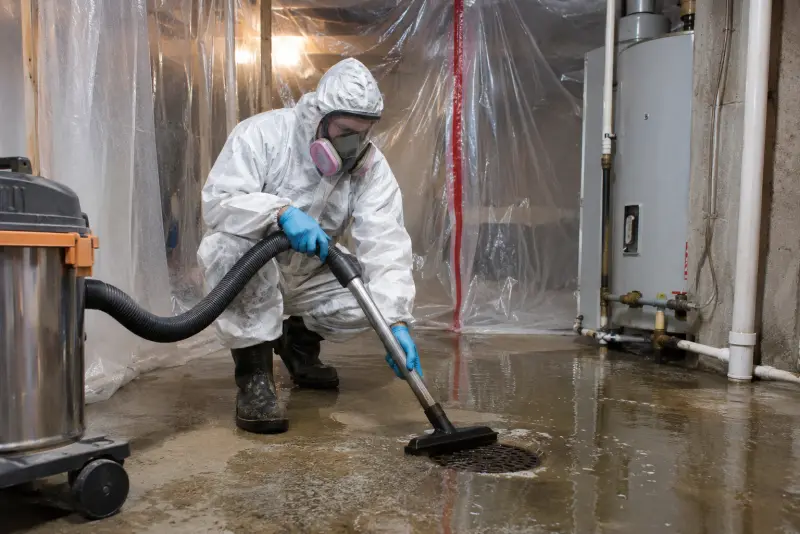
Contaminated water handled with containment, PPE and proper disinfection.
Get help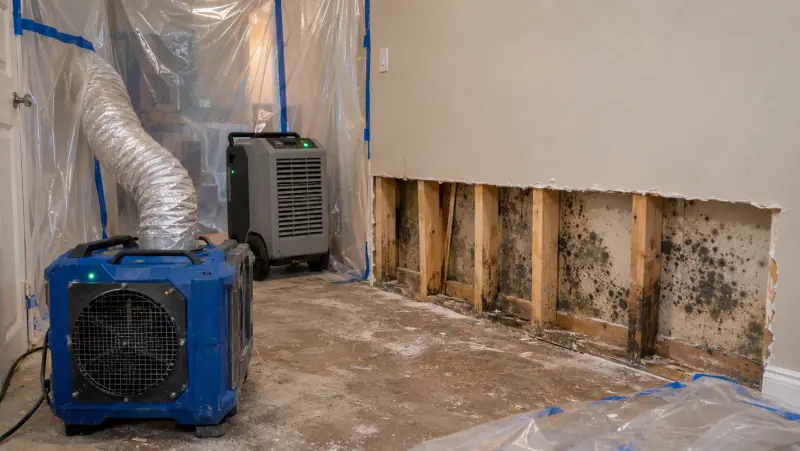
Containment, HEPA filtration and repairs after the structure is dry.
Get helpLocal knowledge matters when the housing stock changes block by block.
21093 · Colonials and split-levels with finished basements. Sump pumps, supply lines and water heaters.
21093 · Established streets near Padonia Road. Basement seepage and appliance failures after cold snaps.
21093 · Ranchers and split-levels on mature lots. Roof leaks, gutter overflow and cast iron drain backups.
21093 · Condos and townhomes with shared plumbing. One supply failure can affect multiple units.
21093 · Retail and office properties. Flat roofs, rooftop units and sprinkler-line breaks.
21093 · Mixed housing near the Lutherville line. Older laterals, tree roots and basement window wells.
These are the signs that usually justify a moisture inspection rather than a wait-and-see approach.
Send a photo or describe what changed. We will tell you whether it needs a visit today.
Call now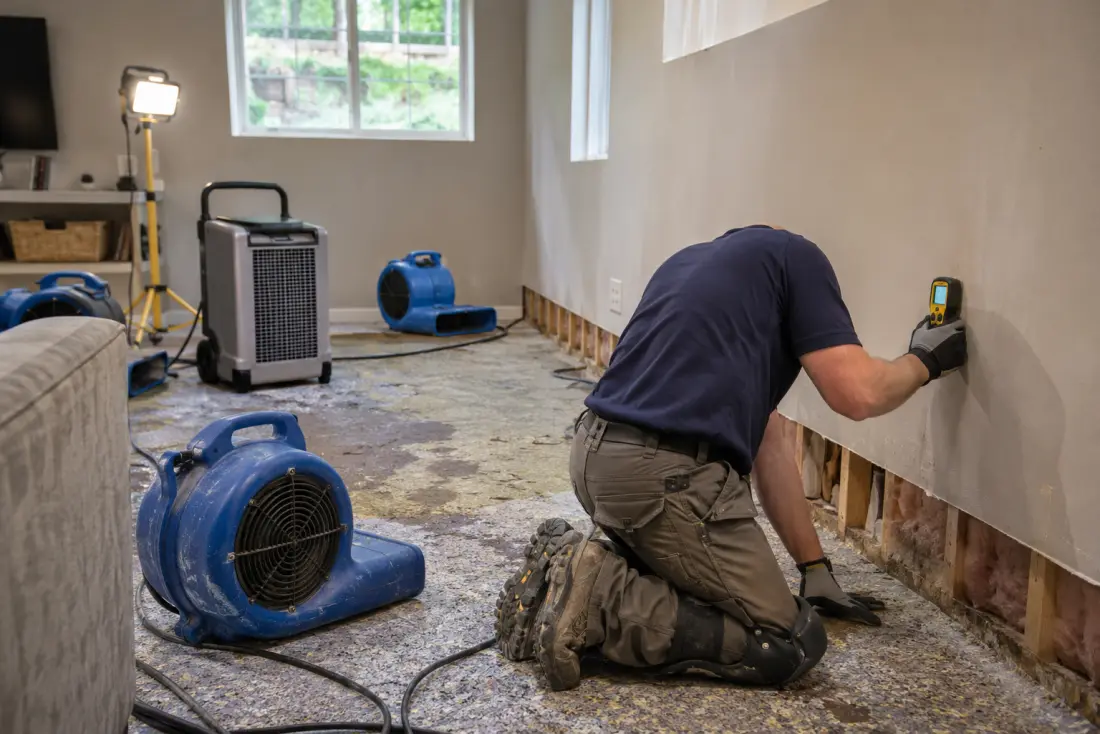
No mystery, no pressure. Here is the sequence from the first call to the final reading.
We confirm the address, the source and whether the water is contaminated. You get safety guidance before the crew leaves.
Moisture meters and thermal imaging map the affected area. We photograph materials and record readings.
Standing water is extracted. Saturated carpet, pad and material that cannot dry in place are removed and documented.
Equipment is sized to the space and checked daily. Drying continues until readings meet the dry standard.
Drywall, trim, flooring and paint are scoped after drying and insurance review.
We reach Timonium from I-83 at Timonium Road or Padonia Road, and from York Road for the eastern neighborhoods. Mays Chapel, Timonium Heights and the fairgrounds area are all straightforward.
For condos and townhomes, give dispatch the building number, unit number and property manager contact. Access and documentation are the two things that slow these jobs down.
Use the map link for the general area. For a crew response, call and give the exact address, gate code and any access notes.
Open area mapLocal answers, not a national script.
Shut off the cold-water supply and the power or gas to the heater if it is safe. Move stored items off the floor and call us. We extract the water, remove saturated pad and evaluate the drywall and framing.
Sometimes. If the drywall is structurally sound and the cavity can be dried through small openings, we may save it. Sagging, contaminated or mold-affected drywall comes out. We test before deciding.
Yes. We contain the work area, protect adjacent units and document moisture on both sides of shared assemblies. The HOA and property manager receive the same readings as the unit owner.
Typically three to five days for a clean-water loss. We monitor daily and remove equipment when readings meet the dry standard, not on a fixed calendar.
We move and block furniture to protect it and to expose wet flooring. Contents that need pack-out or specialized cleaning are documented and discussed before anything leaves the property.
Yes. We provide moisture maps, photos, daily readings and a scope of affected materials. We can communicate directly with your adjuster, but the coverage decision remains with your carrier.
Request service
Call for active water, estimates, scheduling and questions. If water is near outlets, a panel or a gas appliance, leave the area and call from a safe place.
One call gets you shutoff guidance, an arrival window and a plan for Timonium. Have your address and any insurance claim number ready.
Call (410) 397-1674Tap to call from your phone.
Call now. We will tell you what to shut off, what to move and what to leave alone until the crew arrives.
Call (410) 397-1674