
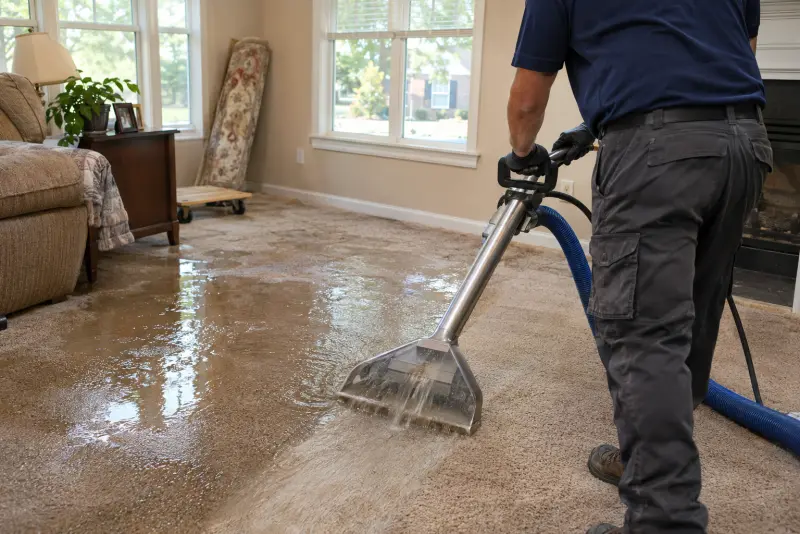
Emergency Water Extraction
Standing water removed before it reaches drywall, trim and stored belongings.
Get help
Lutherville mixes 19th-century houses with post-war neighborhoods, and both have water problems that reward careful, patient work.
Call (410) 397-1674 Or request service online. Calls are answered 24/7.Lutherville's historic core runs along York Road and Bellona Avenue, with 19th-century homes, mature trees and a streetscape that predates modern drainage. Around it are post-war neighborhoods filled with ranchers, colonials and split-levels built from the 1950s through the 1970s.
The older houses bring fieldstone and brick foundations, plaster walls, radiator or boiler systems and clay sewer laterals. Water moves differently in these assemblies. It wicks into mortar, travels behind plaster and shows up as a soft spot far from the leak.
The post-war houses bring their own issues: original copper, cast iron drains, finished basements and tree roots in laterals. In both cases, aggressive demolition is rarely the right first move. We investigate, measure and open only what the readings justify.
Historic and post-war houses fail in different ways, but the water ends up in the same places.
Clay tile laterals crack as ground shifts and roots find the joints. A backup at the floor drain may be the first sign, but groundwater can also enter through the cracks and saturate the soil beside the foundation.
Mortar joints erode and stone foundations weep. Modern waterproof coatings can trap moisture and accelerate spalling, so the fix usually involves drainage and grading rather than a coat of paint.
Plaster hides leaks and then fails suddenly. A soft spot or a bubbling paint line can mean the lath behind it is saturated. We use moisture meters rather than relying on appearance.
Steam and hot-water systems develop leaks at valves, radiators and buried pipes. A slow drip over a heating season can rot a floor from below.
In older homes, the goal is to dry the assembly without destroying historic material. That means targeted openings, controlled airflow and patience with dense plaster and masonry.
The same crew handles extraction, drying, contamination cleanup and the repair.
Standing water removed before it reaches drywall, trim and stored belongings.
Get help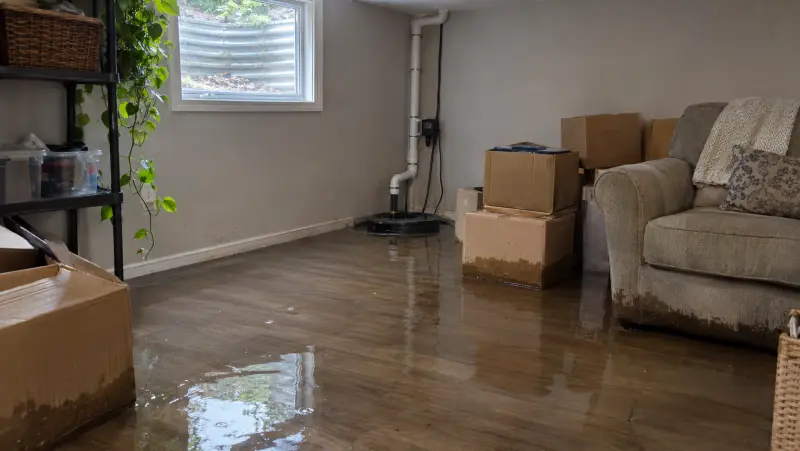
Sump failures, seepage and storm runoff in finished and unfinished basements.
Get help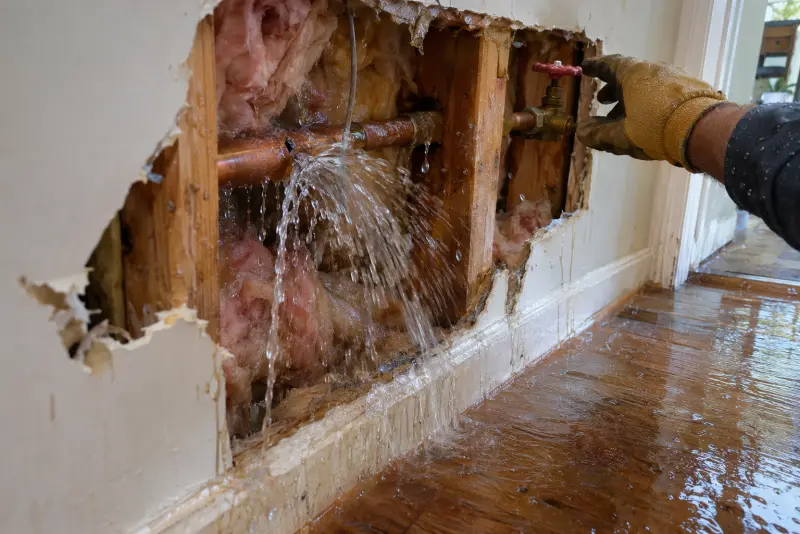
Freeze-thaw splits, hidden wall leaks and ceiling stains traced to the source.
Get help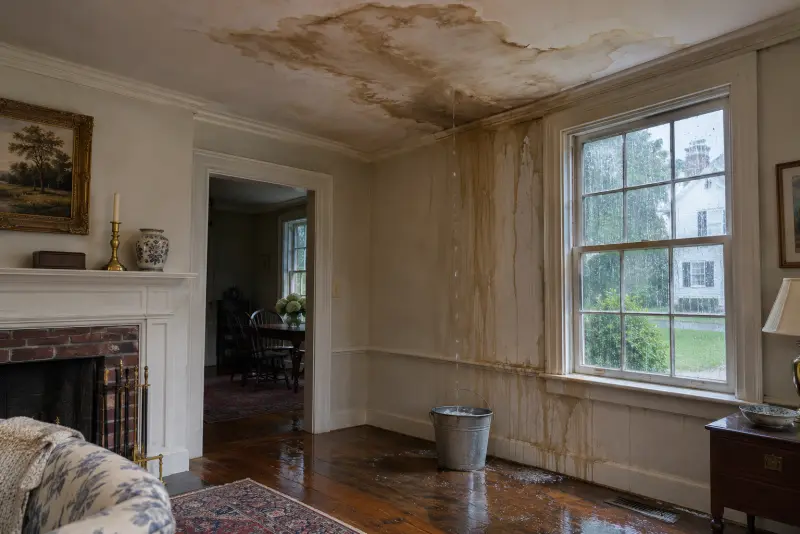
Wind-driven rain, ice dams and ceiling leaks after a Baltimore County storm.
Get help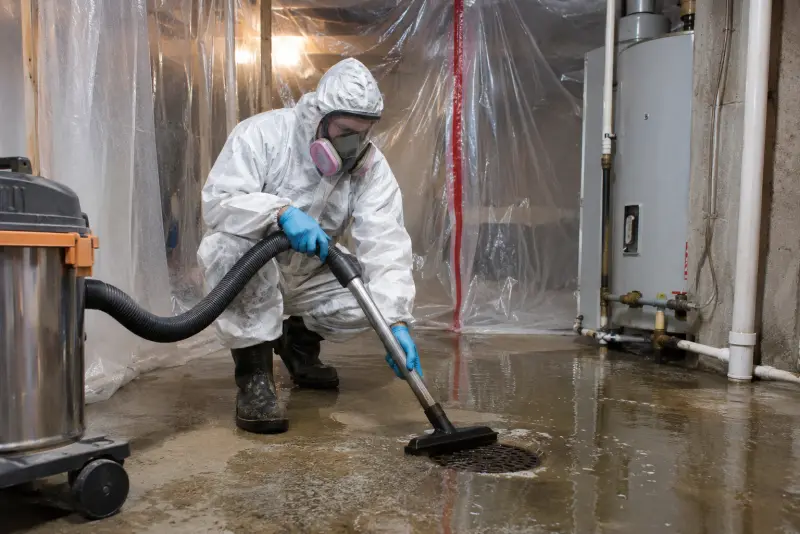
Contaminated water handled with containment, PPE and proper disinfection.
Get help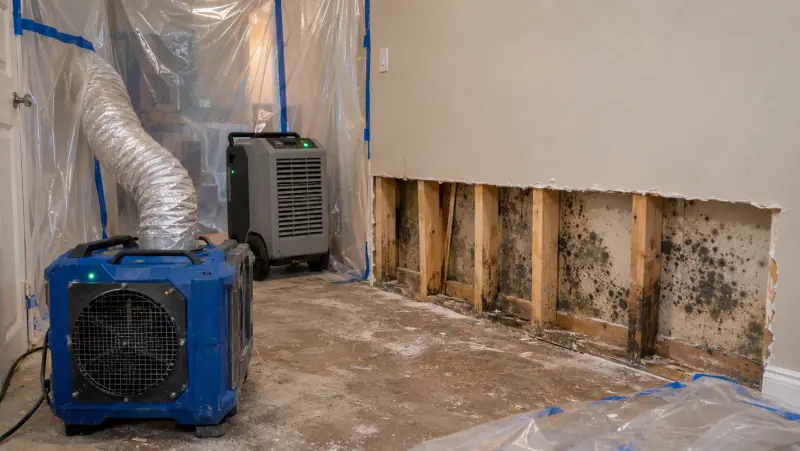
Containment, HEPA filtration and repairs after the structure is dry.
Get helpLocal knowledge matters when the housing stock changes block by block.
21093 · 19th-century homes near Bellona Avenue. Fieldstone foundations, plaster walls and clay laterals.
21093 · Post-war ranchers and colonials. Original copper, cast iron drains and finished basements.
21093 · Mixed housing near the Timonium line. Tree roots, window wells and basement seepage.
21093 · Larger properties and older estates. Long pipe runs, boilers and detached outbuildings.
21093 · Retail and office buildings. Flat roofs, aged sprinkler lines and overnight leaks.
21093 · Older homes on shaded lots. Gutters, grading and foundation drainage matter here.
These are the signs that usually justify a moisture inspection rather than a wait-and-see approach.
Send a photo or describe what changed. We will tell you whether it needs a visit today.
Call now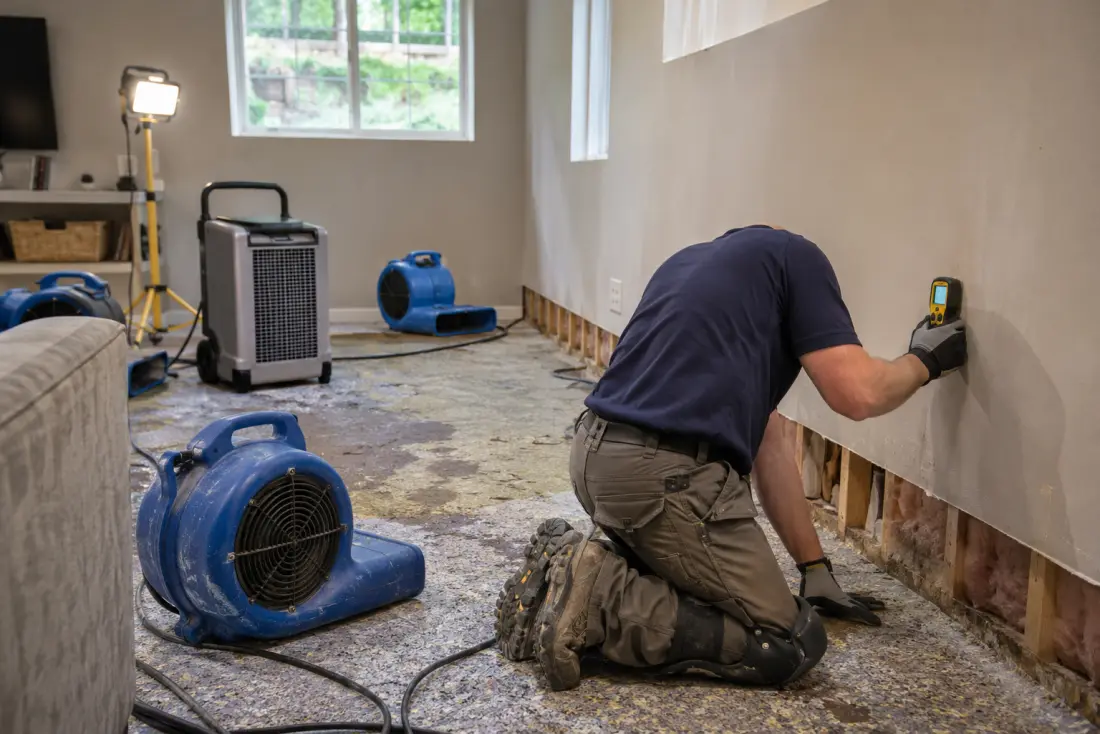
No mystery, no pressure. Here is the sequence from the first call to the final reading.
We confirm the address, the source and whether the water is contaminated. You get safety guidance before the crew leaves.
Moisture meters and thermal imaging map the affected area. We photograph materials and record readings.
Standing water is extracted. Saturated carpet, pad and material that cannot dry in place are removed and documented.
Equipment is sized to the space and checked daily. Drying continues until readings meet the dry standard.
Drywall, trim, flooring and paint are scoped after drying and insurance review.
We reach Lutherville from I-83 at Timonium Road or from York Road. Historic streets near Bellona Avenue can be tight for equipment, so we confirm parking and hose routing before dispatch.
For older properties, tell us about basement access, bulkheads and any finished spaces below grade. It helps us bring the right dehumidifiers and floor protection.
Use the map link for the general area. For a crew response, call and give the exact address, gate code and any access notes.
Open area mapLocal answers, not a national script.
Often, yes, if the leak is found early and the plaster is still sound. Dense plaster dries slowly, so we use meters and longer drying times. Sagging or contaminated plaster is removed.
Some dampness is common, but standing water and repeated seepage are not something to ignore. We identify whether the source is groundwater, a downspout, a lateral or a plumbing leak before recommending a repair.
We handle the interior water damage and can coordinate with a licensed excavation or plumbing contractor for the lateral itself. A camera inspection is usually the first step.
Yes. We use floor protection, control demolition and salvage what can be salvaged. Matching historic trim takes longer, and we discuss that before work starts.
We keep airflow away from open flames and electrical panels, use grounded equipment, and account for the heat source. The boiler area is inspected for leaks before drying begins.
Yes. Lutherville and Timonium share ZIP codes and a border. We cover both from the same dispatch area.
Request service
Call for active water, estimates, scheduling and questions. If water is near outlets, a panel or a gas appliance, leave the area and call from a safe place.
One call gets you shutoff guidance, an arrival window and a plan for Lutherville. Have your address and any insurance claim number ready.
Call (410) 397-1674Tap to call from your phone.
Call now. We will tell you what to shut off, what to move and what to leave alone until the crew arrives.
Call (410) 397-1674