
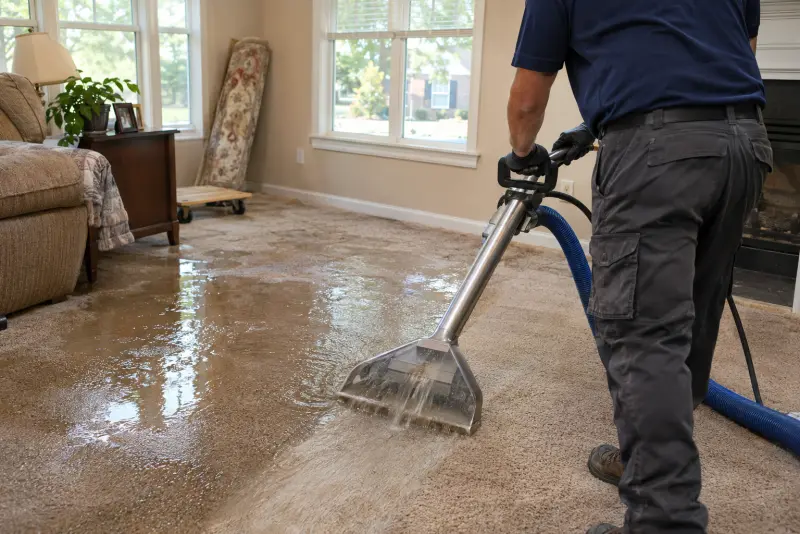
Emergency Water Extraction
Standing water removed before it reaches drywall, trim and stored belongings.
Get help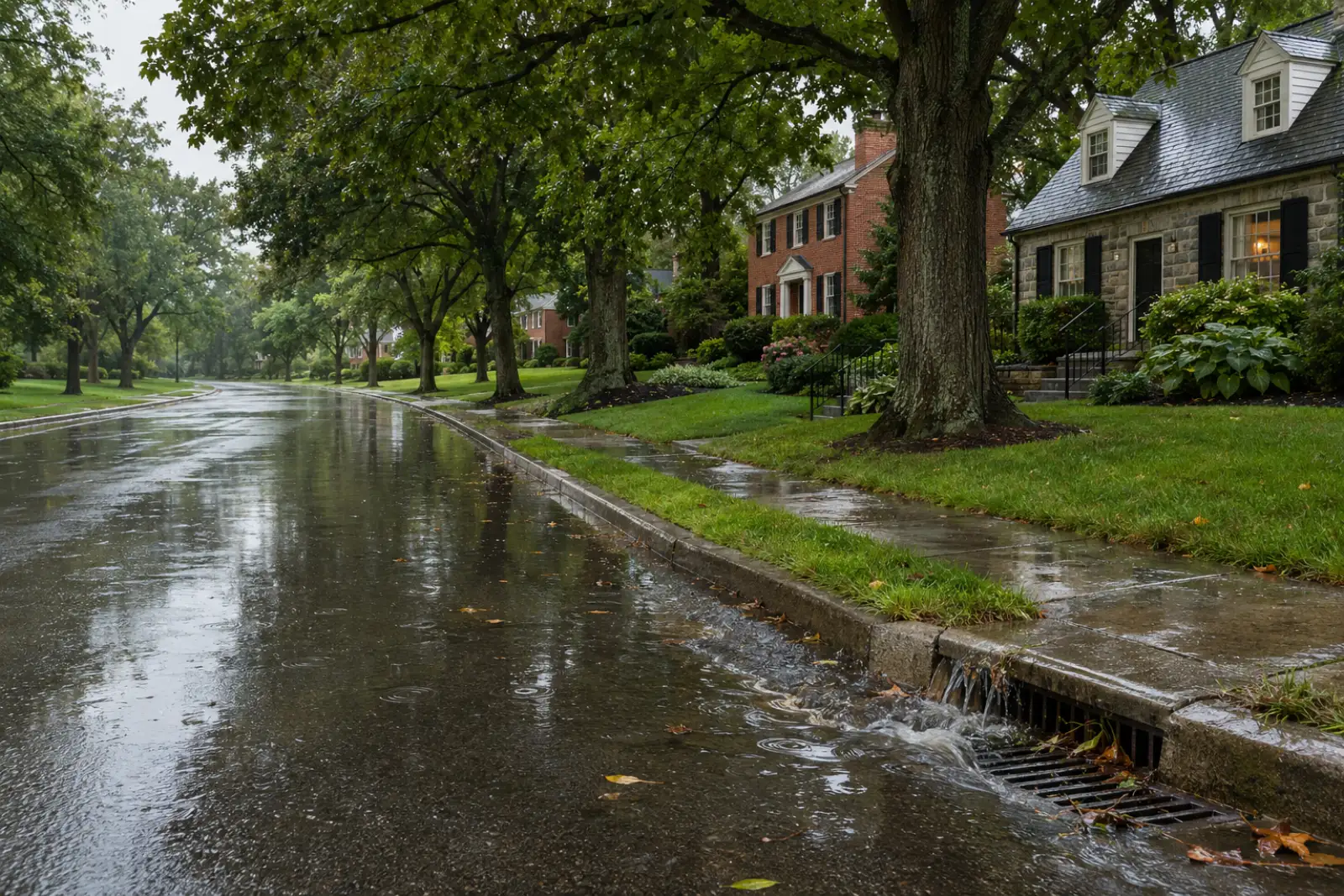
Owings Mills grew quickly from the 1980s onward, and its townhomes, condos and single-family subdivisions bring a distinct set of water problems.
Call (410) 397-1674 Or request service online. Calls are answered 24/7.Owings Mills stretches from Reisterstown Road and the I-795 corridor to New Town, Garrison and the McDonogh area. The housing mix is unusually broad: 1980s and 1990s townhomes, condo buildings, 2000s subdivisions and older ranchers on the outskirts.
Newer construction is not immune to water damage. Supply lines fail at plastic fittings, washing machine hoses burst, water heaters sit in closets without pans, and sump pumps discharge into lines that freeze or clog. In townhomes and condos, shared walls and stacked plumbing spread the damage quickly.
On the older side, original copper and cast iron are now decades old, and mature trees have had time to find laterals. The common factor is that water usually starts small and hides: a slow fitting leak under a sink, a hairline crack in a supply line, a grade that sends storm runoff toward the foundation.
Newer housing changes the materials, not the basic failure modes.
Washing machine hoses, refrigerator lines, dishwasher fittings and water heater connections fail without warning. In a closet or upper floor, the water reaches the ceiling below before it is noticed.
A pump can run perfectly and still fail if the discharge line freezes, clogs or drains back into the pit. Check the exterior outlet and the check valve, not just the pump.
Townhomes and condos concentrate risk. A leak in one unit can travel through a shared assembly and affect neighbors, so documentation and containment matter.
Subdivisions built on graded lots can channel water toward foundations and window wells. Clogged storm inlets and downspouts make it worse.
In newer homes, the repair is often easier than the coordination. We document each unit, protect shared assemblies and keep the HOA or property manager informed.
The same crew handles extraction, drying, contamination cleanup and the repair.
Standing water removed before it reaches drywall, trim and stored belongings.
Get help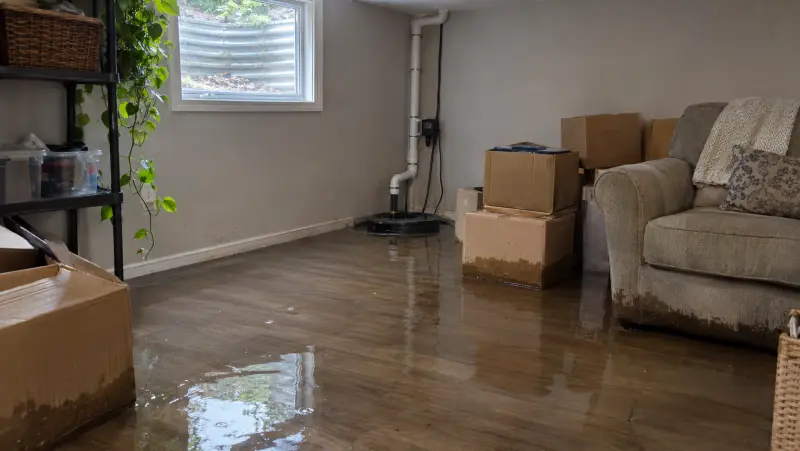
Sump failures, seepage and storm runoff in finished and unfinished basements.
Get help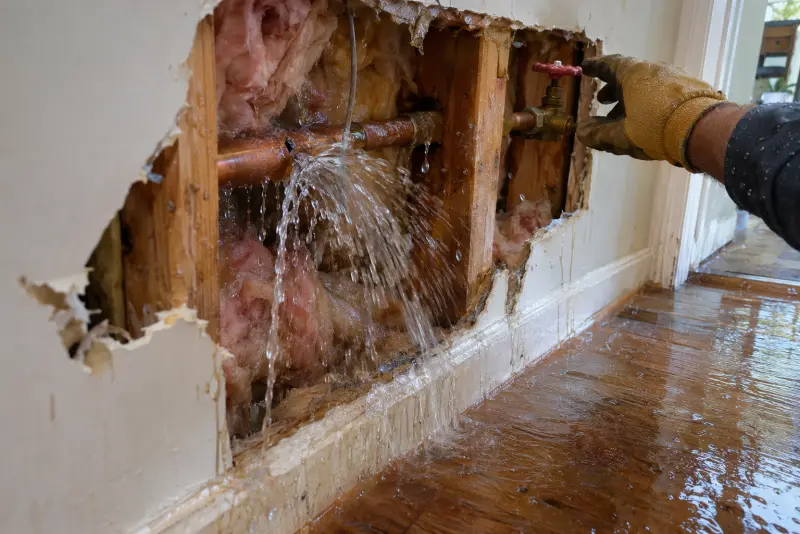
Freeze-thaw splits, hidden wall leaks and ceiling stains traced to the source.
Get help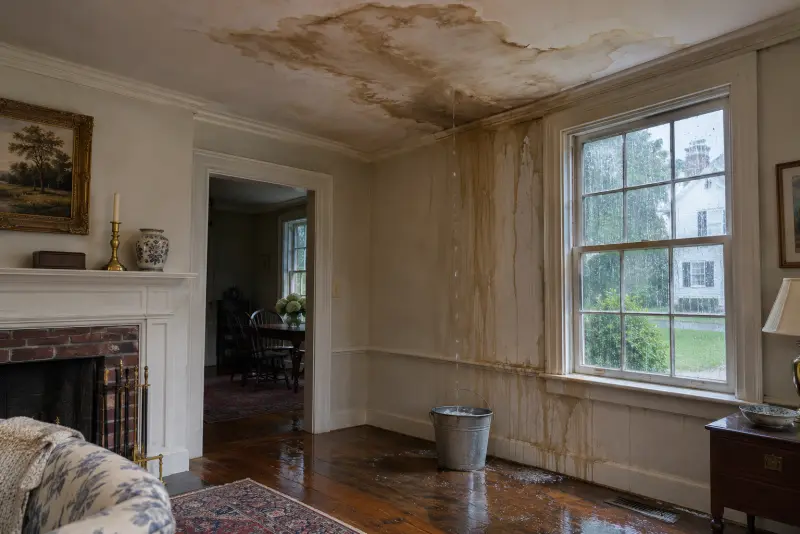
Wind-driven rain, ice dams and ceiling leaks after a Baltimore County storm.
Get help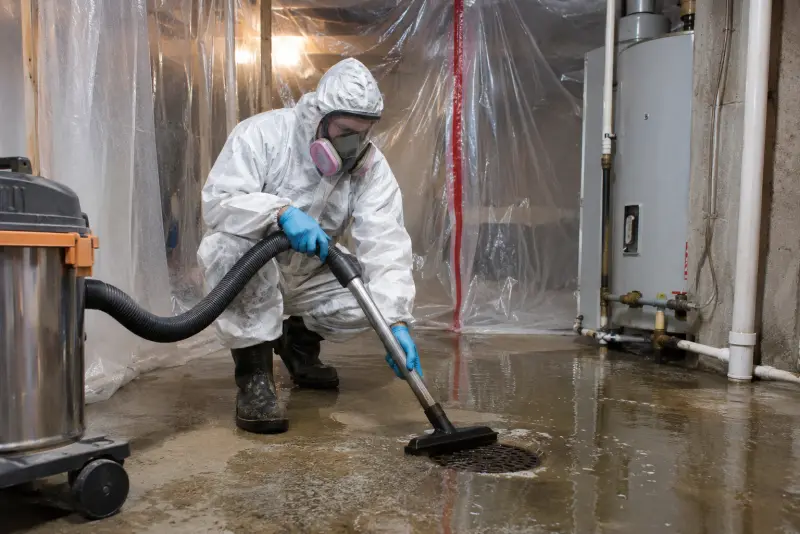
Contaminated water handled with containment, PPE and proper disinfection.
Get help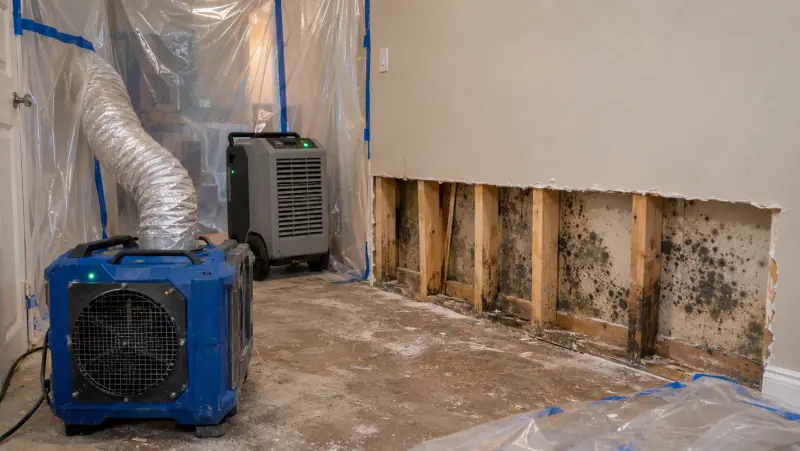
Containment, HEPA filtration and repairs after the structure is dry.
Get helpLocal knowledge matters when the housing stock changes block by block.
21117 · Townhomes and condos with shared walls. Stacked plumbing and HOA coordination.
21117 · Single-family subdivisions and older homes. Sump pumps, supply lines and appliance leaks.
21117 · Larger properties and estate homes. Long pipe runs and multiple mechanical rooms.
21117 · Retail and office properties. Flat roofs, rooftop units and sprinkler lines.
21117 · Mixed commercial and residential. Older plumbing and overnight business leaks.
21117 · Condos and apartments near the valley. Shared stacks and upper-floor failures.
These are the signs that usually justify a moisture inspection rather than a wait-and-see approach.
Send a photo or describe what changed. We will tell you whether it needs a visit today.
Call now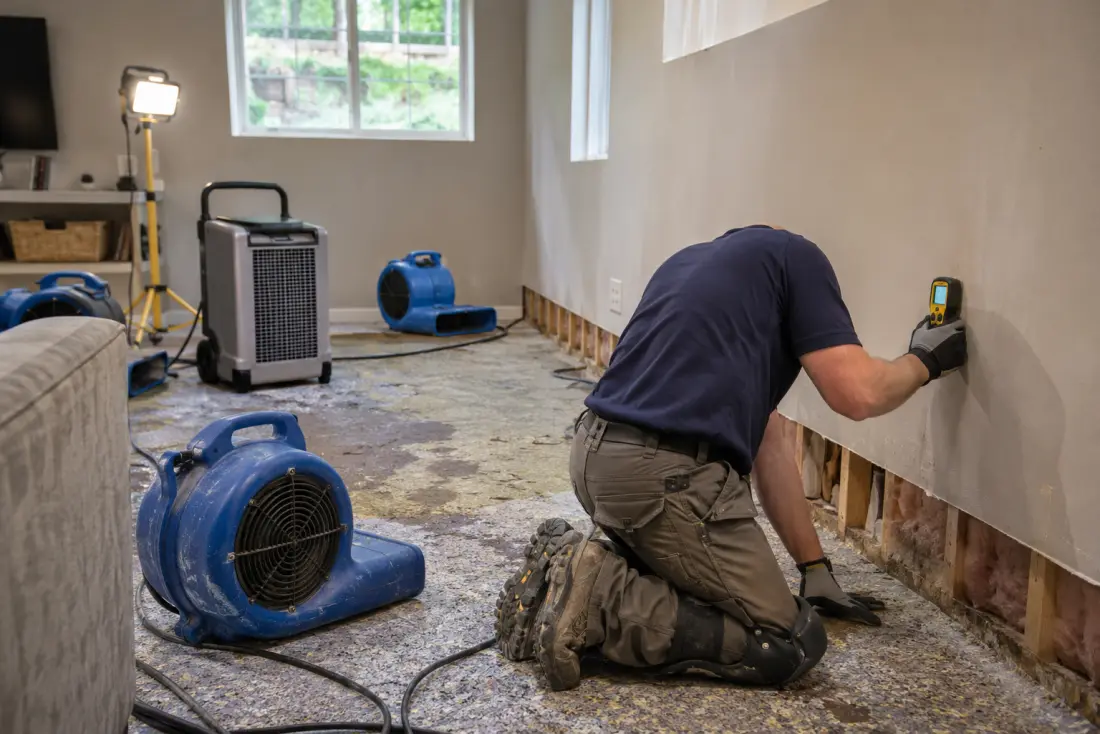
No mystery, no pressure. Here is the sequence from the first call to the final reading.
We confirm the address, the source and whether the water is contaminated. You get safety guidance before the crew leaves.
Moisture meters and thermal imaging map the affected area. We photograph materials and record readings.
Standing water is extracted. Saturated carpet, pad and material that cannot dry in place are removed and documented.
Equipment is sized to the space and checked daily. Drying continues until readings meet the dry standard.
Drywall, trim, flooring and paint are scoped after drying and insurance review.
We reach Owings Mills from I-795, the Baltimore Beltway and Reisterstown Road. New Town, Garrison and the McDonogh area are all within a straightforward drive.
For townhomes and condos, give dispatch the building and unit number plus the property manager contact. Parking and access can be the difference between a same-day start and a delay.
Use the map link for the general area. For a crew response, call and give the exact address, gate code and any access notes.
Open area mapLocal answers, not a national script.
Yes. We contain the work area, document moisture on shared assemblies and coordinate with the HOA or property manager. Each affected unit gets its own readings and photos.
The pump may be undersized, the discharge line may be frozen or clogged, or the check valve may be stuck. We check the whole discharge path, not just the pump.
Sometimes. If the drywall is sound and the cavity can be dried through access openings, we may save it. Saturated or contaminated material is removed.
Yes. We follow parking, containment and work-hour rules, and we provide documentation the HOA may require.
Response depends on traffic and crew location. Owings Mills is within our regular service area, and dispatch gives you a realistic window when you call.
Yes. Reconstruction is scoped after drying and insurance review so the repair matches the approved loss.
Request service
Call for active water, estimates, scheduling and questions. If water is near outlets, a panel or a gas appliance, leave the area and call from a safe place.
One call gets you shutoff guidance, an arrival window and a plan for Owings Mills. Have your address and any insurance claim number ready.
Call (410) 397-1674Tap to call from your phone.
Call now. We will tell you what to shut off, what to move and what to leave alone until the crew arrives.
Call (410) 397-1674